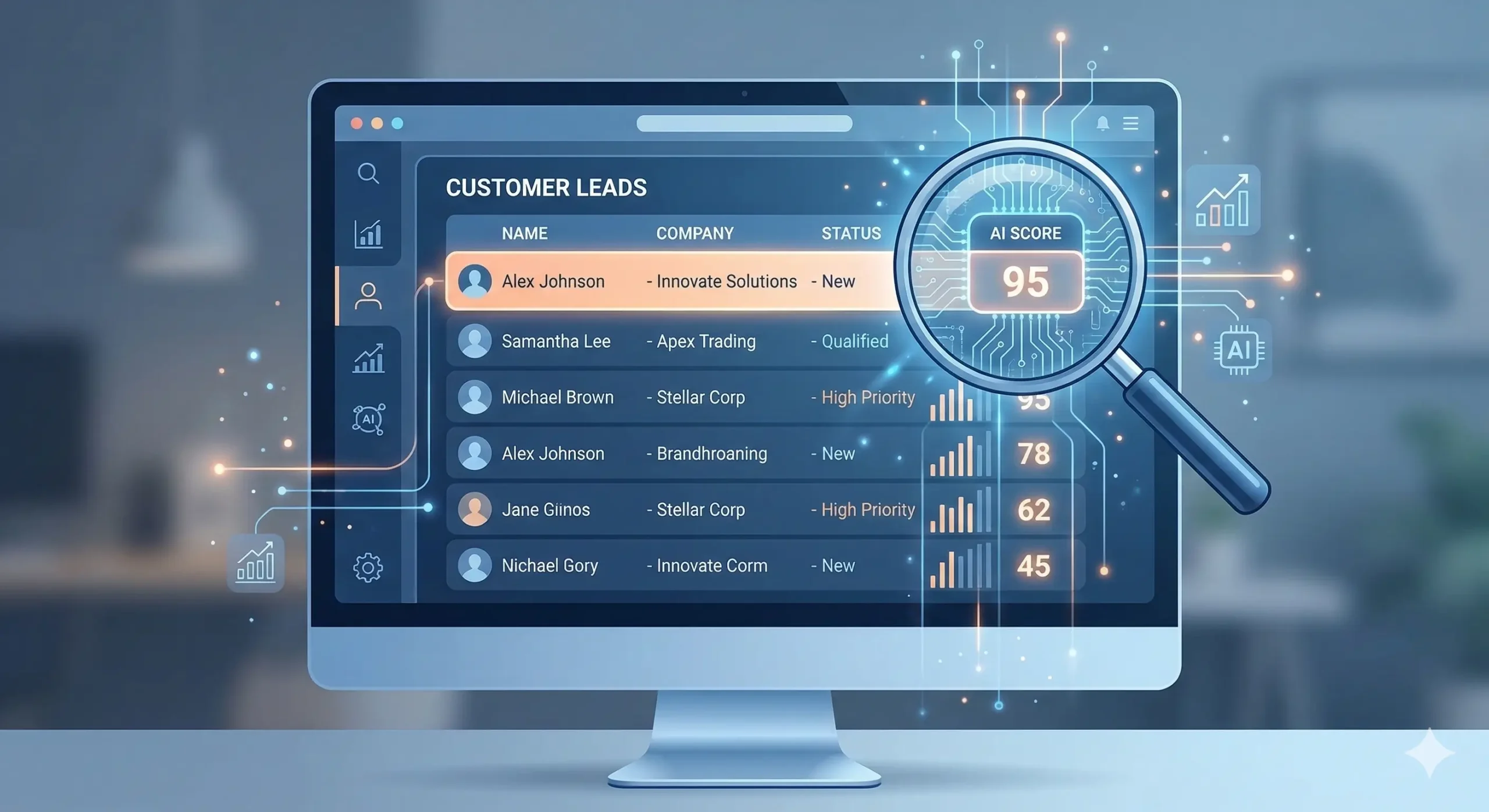
In the world of small business, time is the most valuable currency you have. If your sales team—which might just be you and a couple of others—spends hours chasing every single person who downloads a PDF, you are likely leaving money on the table. This is where AI lead scoring comes in to change the game.
Think of lead scoring as a digital sift. In the past, you had to manually guess which leads were “hot” based on basic info like their job title. Today, AI does the heavy lifting by looking at hundreds of data points to tell you exactly who is ready to buy right now.
The Shift from Manual to Machine Learning
Traditional lead scoring was often a game of “if/then” rules. If a lead opened an email, give them 5 points. If they visited the pricing page, give them 10. It was better than nothing, but it was rigid and often missed the nuance of real human behavior.
AI lead scoring, however, is more like a seasoned sales veteran who never sleeps. It analyzes historical data and real-time actions—like how long someone hovered on a specific feature page or if they’ve interacted with your brand on social media—to predict conversion probability with startling accuracy.
Insight: Companies using AI for lead scoring often see conversion rates climb by up to 25% because they stop wasting time on “window shoppers.”
Why Small Businesses are the Big Winners
You might think AI is only for enterprise giants with massive budgets. In 2026, that is simply no longer true. Affordable tools now allow small teams to act like much larger organizations by automating the qualification process.
When you have 50 leads a month, you can probably handle them manually. When that jumps to 500, things get messy. AI ensures that the person most likely to sign a contract is at the very top of your list every single morning.
Top AI Lead Scoring Tools for SMBs in 2026
Choosing the right tool depends on your current setup and how much data you actually have. Here is a look at the top contenders for small business growth this year:
| Tool | Best For | Starting Price (Approx.) |
|---|---|---|
| HubSpot (Sales Hub) | All-in-one CRM users | $90/mo (Professional) |
| ActiveCampaign | Marketing-heavy teams | $49/mo |
| Zoho CRM (Zia AI) | Budget-conscious teams | $14/mo |
| Apollo.io | Outreach & prospecting | $49/mo |
| Pipedrive | Visual sales pipelines | $24/mo |
Breaking Down the Options
If you are already using a CRM, start there. HubSpot and Zoho have built-in AI (like Zoho’s Zia) that learns from your existing deal history. These are great because they don’t require you to move data between different platforms.
For those focused on cold outreach, Apollo.io is a powerhouse. It doesn’t just score the leads you have; it helps you find new ones that look exactly like your best customers. It’s like having a scout who finds the best players before the game even starts.
How to Get Started with AI Scoring
Don’t feel like you need to over-complicate things on day one. You can follow this simple roadmap to integrate AI into your sales process:
- Audit Your Data: AI is only as good as the information you give it. Clean up your CRM and remove duplicate or fake contacts.
- Define Your “Ideal Customer”: Tell the AI what a “win” looks like. Is it a certain company size? A specific industry?
- Set Your Thresholds: Decide at what score a lead should be handed from marketing to a live salesperson.
- Monitor and Tweak: Check in monthly. If the AI is scoring leads highly but they aren’t closing, you may need to adjust your criteria.
Common Pitfalls to Avoid
The biggest mistake small businesses make is the “set it and forget it” mentality. AI is a learning machine, but it still needs a human touch to ensure the logic aligns with your actual sales conversations.
Also, beware of “black box” AI. You want a tool that can explain *why* a lead got a high score. If a lead is scored 95/100, your sales rep should know if it’s because they attended a webinar or because they’ve visited the site ten times in two days.
The Bottom Line on Growth
At abbas.studio, we believe that technology should empower people, not replace them. AI lead scoring doesn’t take the “selling” out of sales; it just makes sure your best people are talking to the right prospects at the perfect moment.
By removing the guesswork from your pipeline, you reduce friction, shorten your sales cycle, and ultimately grow faster without having to double your headcount. In 2026, it isn’t about working harder—it’s about letting the data tell you where to focus your energy.
Would you like me to help you compare two specific tools from the list to see which fits your current CRM better?