The New Face of Hospitality
Walk into a busy bistro today, and the atmosphere feels familiar—the clinking of silverware, the hum of conversation, and the aroma of fresh herbs. Yet, behind the scenes, a quiet revolution is taking place. Restaurants are no longer just places to eat; they are becoming data-driven environments where AI acts as a silent partner to the front-of-house team.
For many diners, the first interaction with a restaurant now happens before they even step through the door. AI is bridging the gap between digital convenience and the personal touch that defines great service. It is not about replacing the waiter’s smile; it is about giving the staff the tools they need to make every guest feel like a regular.
In this guide, we will explore the practical ways AI is reshaping the dining experience, from the moment a reservation is made to the final bill. Whether you are a restaurateur or a curious diner, understanding these shifts is key to navigating the modern food landscape.
—
Smart Reservations and Instant Communication
One of the most immediate impacts of AI is found in the booking process. Traditional phone reservations often lead to missed calls during a rush or errors in a busy host’s ledger. AI voice agents and chatbots have stepped in to solve this friction, offering 24/7 responsiveness without a moment’s delay.
Take, for instance, tools like Slang.ai or Tidio. These platforms handle common inquiries about parking, allergens, or opening hours instantly. This ensures that when a human host finally greets you, they aren’t distracted by a ringing phone—they are focused entirely on welcoming you to the table.
Hyper-Personalization: The Digital Regular
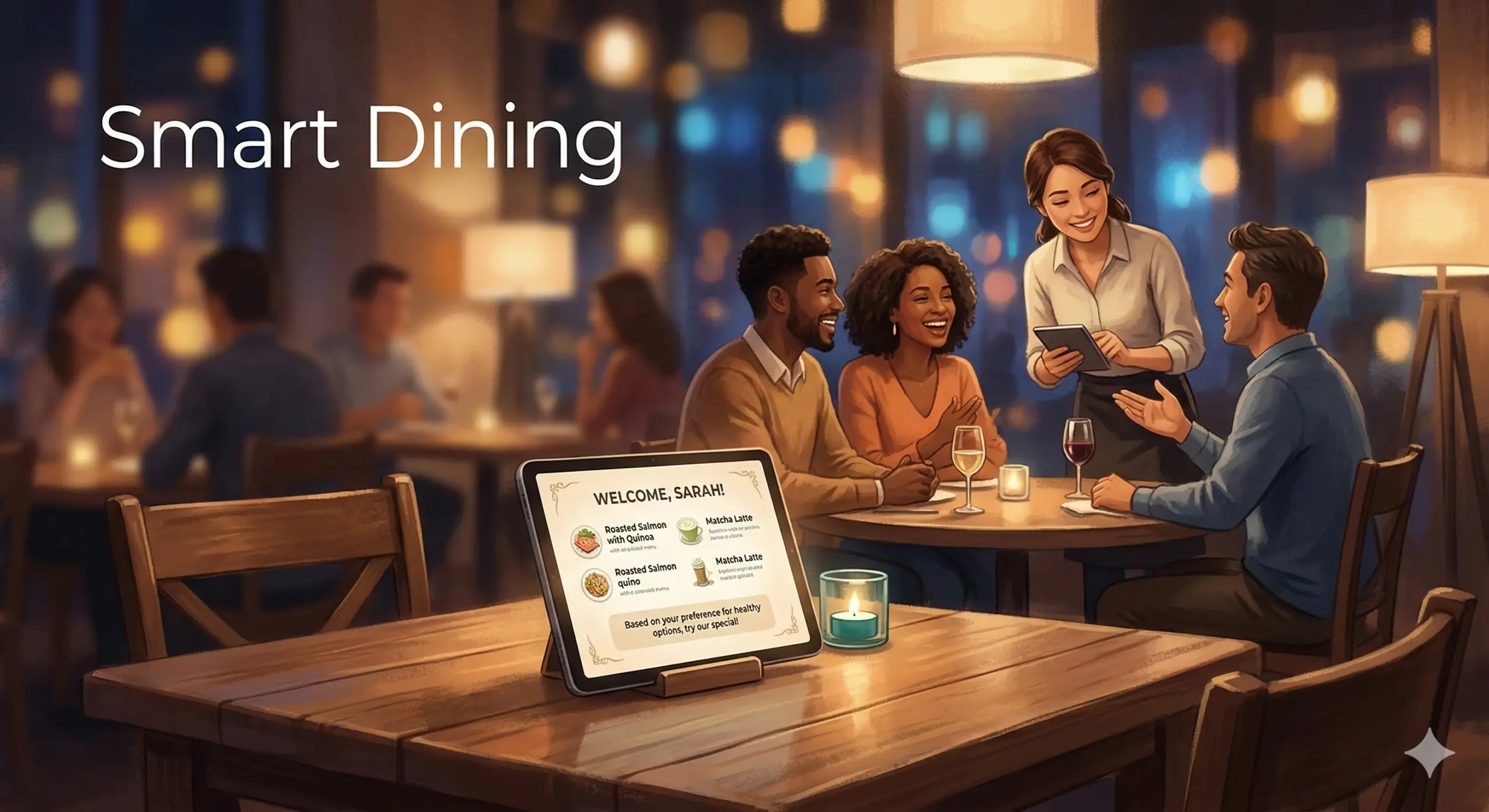
In the past, only the most dedicated servers remembered that a guest preferred the corner booth or had a severe nut allergy. Today, AI-powered Customer Data Platforms (CDPs) allow every staff member to have that same level of insight. When a guest books a table, the system can flag their preferences from previous visits across multiple locations.
Modern loyalty programs, such as those used by Panera Bread, utilize AI to offer rewards that actually matter to the individual. If the system knows you always skip the soda but love the sourdough, your personalized offer will reflect that choice. This level of recognition builds a sense of belonging that generic marketing simply cannot match.
—
Efficiency in Ordering and Accuracy
Wait times are a frequent pain point in customer service. AI is tackling this through smarter ordering systems that anticipate human behavior. In 2026, we are seeing drive-thru AI like Taco John’s “Olena” handle over 90% of orders with startling accuracy, allowing human workers to focus on food quality and speed.
Inside the restaurant, digital menus are becoming more than just static lists. AI-driven tablets can suggest wine pairings based on your entree choice or even adjust recommendations based on the current weather. On a chilly evening, the system might highlight a hearty beef stew, while a sunny afternoon brings a crisp salad to the top of the list.
These systems also reduce the dreaded “order error.” By integrating directly with the Point of Sale (POS) system, the AI ensures that specific modifications—like “no onions” or “extra spicy”—are communicated to the kitchen exactly as requested. This precision saves the guest from disappointment and the restaurant from costly food waste.
—
Predictive Analytics: Solving Problems Before They Happen
Customer service is often at its worst when a restaurant is understaffed or out of a popular dish. Predictive analytics tools, such as Back Office or Incentivio, analyze years of historical data to forecast exactly how busy a Tuesday night in March will be.
By accurately predicting foot traffic, managers can schedule the right number of servers. This prevents the “in the weeds” feeling where service slows down and tempers flare. When the staff feels supported and the kitchen is prepared, the guest experiences a smooth, rhythmic service that feels effortless.
Furthermore, AI helps manage inventory by predicting which ingredients will be in high demand. This means you are less likely to hear the phrase, “I’m sorry, we’re out of the sea bass tonight.” It is a win-win for operational efficiency and guest satisfaction.
—
Notes for the Modern Restaurateur
If you are looking to implement these tools, keep the following principles in mind:
- Human-in-the-Loop: AI should handle the repetitive tasks, but a human should always be available to step in for complex requests or emotional escalations.
- Data Privacy: Be transparent with guests about how their preferences are being saved. Trust is the foundation of hospitality.
- Start Small: You don’t need a robot chef. Start with an AI-powered reservation tool or a smarter loyalty program to see immediate ROI.
—
A Balanced Future
As we look toward the future of the industry, the most successful restaurants will be those that use AI to enhance—not replace—the human element. Technology is at its best when it fades into the background, leaving the spotlight on the food, the ambiance, and the connection between people.
The goal of AI in customer service isn’t to create a cold, mechanical world. Rather, it is to remove the logistical hurdles that stand in the way of true hospitality. When the machines handle the data, the humans can finally get back to the heart of the business: taking care of people.
Would you like me to help you compare specific AI POS systems for your own business needs?