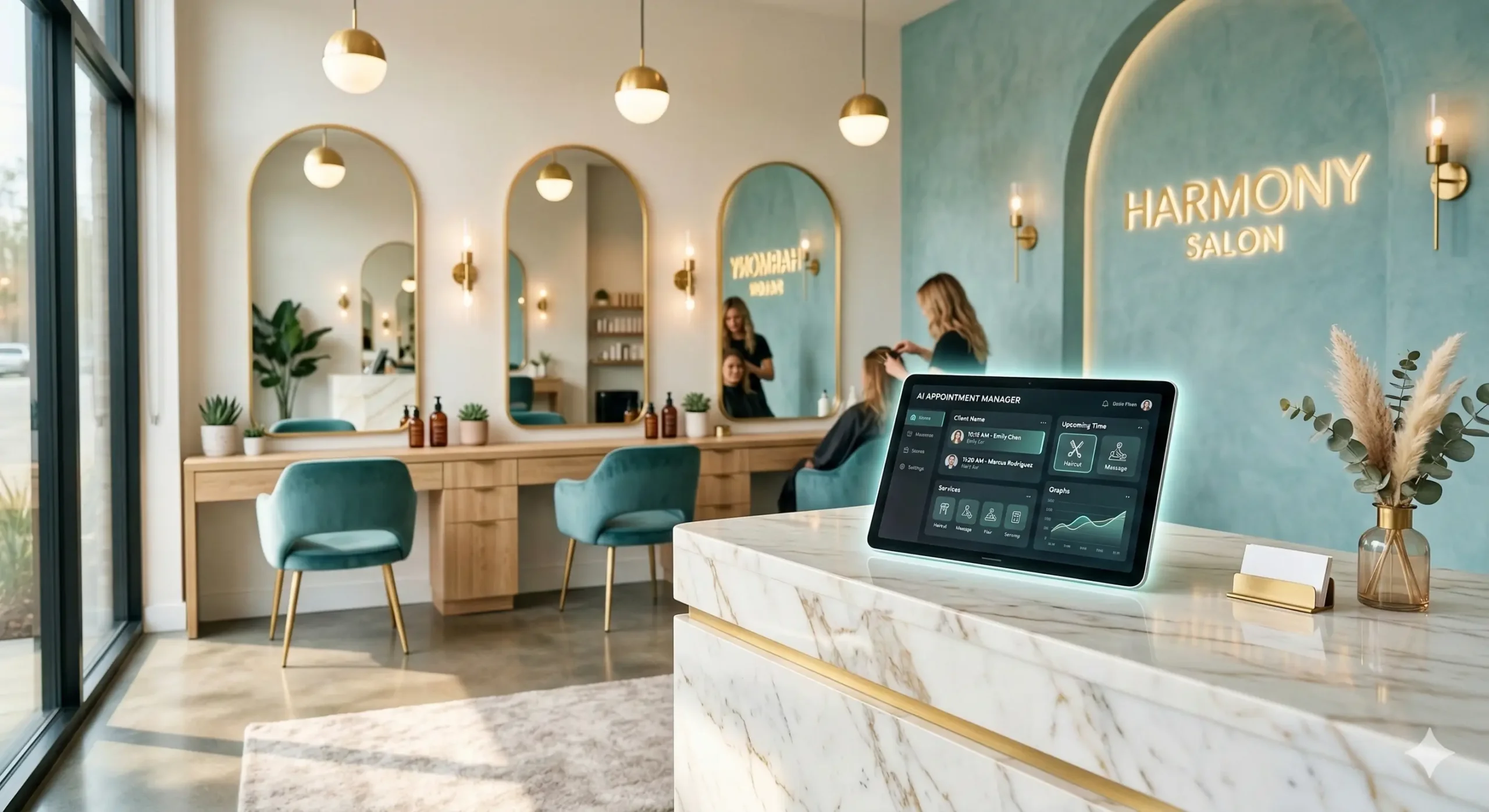
The New Face of Salon Scheduling
Running a salon or spa is often a balancing act. Between managing walk-ins, handling phone calls, and ensuring every stylist has a full book, the administrative side can feel like a second full-time job.
For years, the industry relied on paper ledgers or basic digital calendars. While these worked, they didn’t actively help grow the business. They were passive tools that required constant human monitoring.
Enter Artificial Intelligence. AI is no longer just for tech giants; it is becoming a silent partner for beauty professionals. It takes the guesswork out of scheduling and allows owners to focus on what they do best: making people feel beautiful.
How AI Simplifies the Booking Process
Think of an AI booking assistant as a receptionist who never sleeps, never gets tired, and can talk to ten people at once. It provides a level of accessibility that traditional systems simply can’t match.
Most AI systems integrate directly with your website or social media. When a client wants a 2:00 PM massage on a Tuesday, the AI checks real-time availability and confirms the slot instantly without a single click from your staff.
This immediacy is crucial. In a world of instant gratification, a client who has to wait for a callback might wander over to a competitor who offers instant online confirmation.
Reducing the Sting of No-Shows
Every salon owner knows the frustration of a “no-show.” An empty chair isn’t just a missed opportunity; it’s lost revenue that you can never recover. It’s like a restaurant table sitting empty during the dinner rush.
AI helps solve this through intelligent reminders. Instead of a generic text, AI can send personalized nudges based on the client’s preferred communication channel, whether that is SMS, email, or a push notification.
Some advanced systems even analyze historical data. If a specific client has a habit of forgetting appointments, the AI might send them a reminder a bit earlier or request a small confirmation deposit to secure the spot.
Comparison of Traditional vs. AI Management
| Feature | Traditional Scheduling | AI-Driven Management |
|---|---|---|
| Availability | Business hours only | 24/7 Instant booking |
| Staff Burden | High (Manual entry) | Low (Automated sync) |
| Client Reminders | Manual or generic | Personalized & Predictive |
| Waitlist Handling | Phone tag | Auto-filling cancellations |
Intelligent Gap Filling and Upselling
One of the most impressive feats of AI is its ability to optimize the calendar. It doesn’t just place appointments anywhere; it looks for ways to minimize “dead time” between sessions.
If a color treatment ends at 1:00 PM and the next starts at 1:45 PM, that 45-minute gap is often too short for a major service but too long to be productive. AI can suggest a quick brow wax or a deep conditioning treatment to the client to fill that hole.
It acts like a strategist, looking at the puzzle of your day and moving pieces around to ensure maximum efficiency. It’s the difference between a box of loose crayons and a perfectly organized set.
The Personal Touch Through Data
A common fear is that AI makes the experience feel cold or robotic. In reality, it can make the service feel more personal. By tracking client preferences, AI helps staff prepare for every individual.
When a client checks in, the system can alert the stylist that the client prefers green tea over coffee, or that they haven’t had a scalp massage in three months. These small details build immense loyalty.
The AI handles the data crunching so the human professional can focus on the emotional connection. It’s about using technology to clear the path for better human-to-human interaction.
Handling the Unexpected: Automated Waitlists
Cancellations are inevitable. In a traditional setup, when someone cancels, the receptionist has to go through a physical list and call five different people to see who can make it on short notice.
An AI system handles this in seconds. It can blast a message to everyone on the waitlist or those who have expressed interest in that specific time slot. The first person to click “Accept” gets the spot.
This automated shuffle keeps the schedule tight and ensures that your stylists aren’t sitting idle due to a last-minute change in a client’s plans.
Getting Started with AI Integration
Transitioning to an AI-managed system doesn’t have to happen overnight. Many modern POS (Point of Sale) systems already have these features built-in, waiting to be toggled on.
Start by automating your reminders and online booking. Once you see the time savings, you can move into more advanced features like predictive inventory ordering or automated marketing campaigns.
The goal isn’t to replace your staff, but to give them their time back. When your team isn’t glued to the phone, they can spend more energy on the clients currently in their chairs.
A Future-Proof Business Model
The beauty industry is evolving, and client expectations are higher than ever. They want convenience, personalization, and speed. AI provides the framework to deliver all three consistently.
By adopting these tools now, you aren’t just following a trend; you are building a more resilient, profitable business. You are ensuring that your salon remains a sanctuary for clients and a streamlined workplace for your team.
Ultimately, AI in appointment management is about harmony. It balances the technical needs of the business with the creative needs of the artists, resulting in a better experience for everyone involved.