The End of the Repetitive Inbox
If you own a small business, you likely spend a chunk of every day answering the same five questions. “What are your hours?” “Do you ship to Canada?” “Is the blue sweater back in stock?” It is part of the job, but it is also a major time-sink.
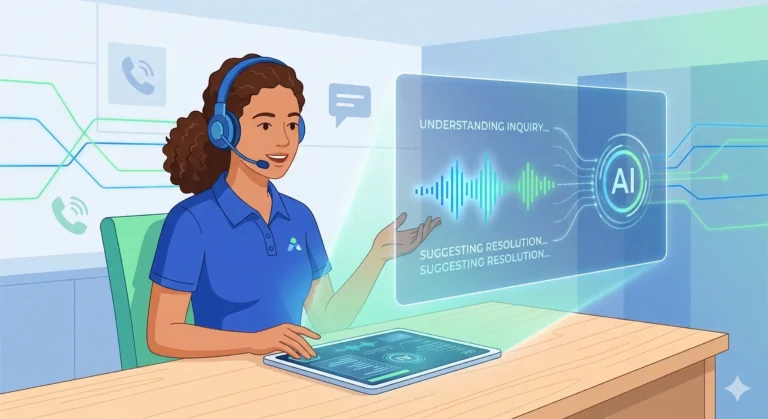
In the past, the only solution was to hire more staff or let the emails pile up. Today, small businesses are turning to Artificial Intelligence to act as a front-line concierge. These tools don’t just provide canned responses; they understand the intent behind a customer’s query.
Think of it like having a tireless assistant who has memorized your entire handbook. They can greet every customer instantly, even at 3:00 AM, while you are getting the rest you need to actually run your company.
From Simple Keywords to Real Conversations
Early automated systems were often frustrating. If a customer didn’t use the exact word “refund,” the bot would break. Modern AI uses Natural Language Processing (NLP) to understand context and nuance.
For example, if a customer asks, “Can I get my money back?” or “What is your return policy?” or even “This didn’t fit, what now?”, the AI recognizes that these all stem from the same basic FAQ. It provides the right answer without requiring the user to speak like a robot.
This shift from “keyword matching” to “intent recognition” is what makes AI viable for small shops. It feels less like a hurdle for the customer and more like a helpful shortcut to the information they need.
The Multi-Channel Support Strategy
Customers today are everywhere. They might reach out via your website, Instagram DMs, or Facebook Messenger. Managing these separate silos can feel like spinning plates in a windstorm.
AI tools can unify these channels. By connecting a central AI brain to all your messaging platforms, you ensure that a customer gets the same accurate answer whether they are clicking a chat bubble on your site or sending a private message on social media.
This consistency builds trust. It tells your audience that your business is professional, responsive, and modern, regardless of which digital door they choose to walk through.
Choosing the Right Tool for Your Scale
You don’t need a Silicon Valley budget to implement these systems. There are several tiers of AI support depending on your volume and technical comfort level. Here is a quick look at how they generally break down:
| Tool Type | Ideal For | Primary Benefit |
|---|---|---|
| Basic Chatbots | Solo Entrepreneurs | Instant answers to 10-20 top FAQs. |
| AI Knowledge Bases | Growing Teams | Scans your existing docs to find answers. |
| Full Service AI | E-commerce Stores | Can track orders and process returns. |
Saving Time Where It Matters Most
The real value of AI isn’t just in the technology—it is in the time it gives back to the business owner. When 80% of your customer inquiries are handled automatically, your “human” time becomes much more valuable.
You can spend those reclaimed hours on product development, marketing, or high-level customer issues that truly require a human touch. For instance, an AI can handle a shipping status update, but you should be the one to handle a sensitive complaint from a long-time client.
It is about striking a balance. The AI handles the high-volume, low-complexity tasks, while you focus on the creative and emotional aspects of the business that a machine can’t replicate.
Tips for Training Your AI Assistant
- Start with your Sent folder: Look at your last 50 sent emails to see which questions you answer most often.
- Use a human tone: Just because a bot is answering doesn’t mean it should sound like a computer. Give it a personality that matches your brand.
- Provide a clear exit: Always make it easy for a customer to ask for a real person if the AI can’t solve their problem.
- Update regularly: When your policies or prices change, make sure your AI knowledge base is the first thing you update.
The Importance of the ‘Hand-Off’
One of the biggest mistakes small businesses make is letting the AI become a wall. A successful FAQ system acts more like a filter. If the AI detects frustration—using sentiment analysis—it can immediately flag the conversation for a human.
Imagine a customer who is clearly upset about a late delivery. The AI can detect the urgency and tone, then send a priority alert to your phone. This allows you to jump in and save the relationship before things escalate.
This seamless hand-off ensures that automation never comes at the cost of empathy. You get the efficiency of a machine with the heart of a small business.
Looking Toward the Future
As we move further into 2026, these tools are becoming even more proactive. Instead of just answering questions, AI can now suggest products or offer personalized discounts based on the customer’s history.
For a small business, this means your FAQ bot is evolving into a sales assistant. It’s no longer just about defensive support; it’s about offensive growth. By helping customers faster, you are removing the friction that usually stops people from completing a purchase.
The barrier to entry is lower than it has ever been. If you have a website and a list of common questions, you have everything you need to start automating your customer service today.
Would you like me to suggest a few specific AI platforms that integrate directly with the website builder you are currently using?