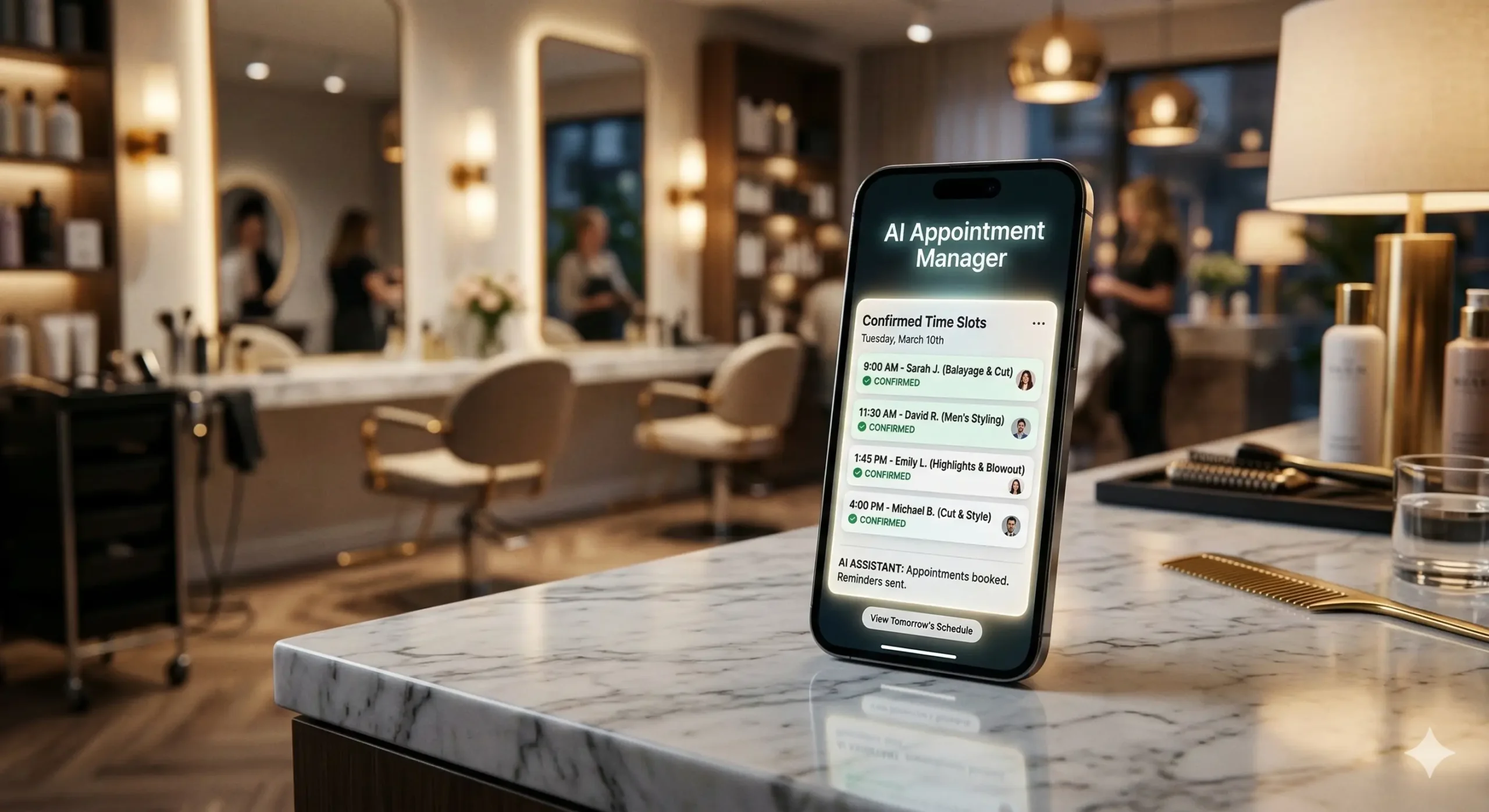
The End of the Scheduling Headache
For service-based businesses, the calendar is the heartbeat of the operation. Whether you are running a boutique dental clinic, a busy law firm, or a high-end salon, every minute on that calendar represents potential revenue. Yet, managing those minutes is often the most exhausting part of the job.
Between back-and-forth emails, missed phone calls, and the dreaded last-minute cancellation, manual scheduling is a massive drain on productivity. It is like trying to play a high-stakes game of Tetris where the pieces keep moving on their own. This is where AI-driven appointment management steps in to take over the heavy lifting.
Modern AI doesn’t just provide a digital calendar; it acts as a 24/7 virtual receptionist that understands your business rules. It can handle complex booking logic that would normally require a human brain, allowing you to focus on the work that actually generates value.
How AI Scheduling Differs from Traditional Tools
You might be familiar with standard online booking forms where a customer picks a time and hits submit. While helpful, these systems are often “dumb.” They don’t account for travel time between appointments, the specific complexity of a service, or the historical habits of a certain client.
AI-enhanced systems use predictive logic to optimize the day. If a specific type of repair job usually takes 15 minutes longer than the manual says, the AI learns this over time and adjusts your availability automatically. It stops being a static grid and becomes a dynamic, breathing ecosystem.
Insight: AI scheduling tools in 2026 can reduce administrative overhead by up to 40% for small service firms, effectively giving owners nearly two extra days of work time per month.
Reducing the Sting of No-Shows
Every no-show is a double loss: you lose the income from the missed appointment, and you lose the chance to have booked someone else in that slot. Traditional reminders help, but AI takes a much more surgical approach to preventing empty chairs.
AI can analyze client behavior to identify who is most likely to forget an appointment. It might send a standard text to a reliable regular, but a more interactive, confirmation-required message to someone who has flaked in the past. It can even suggest “filling” that slot from a waitlist the moment a cancellation occurs.
Think of it as a smart filter. Instead of shouting at everyone with the same generic reminder, the AI whispers the right nudge to the right person at the exact moment they are most likely to respond. This personalized touch keeps your seats full without you having to pick up the phone.
Handling the ‘Human’ Nuance of Booking
One of the biggest fears business owners have is that an automated system will be too rigid. What if a VIP client needs a slot that isn’t technically open? Or what if you need a buffer after a particularly grueling service? AI is surprisingly good at handling these “soft” rules.
Natural Language Processing (NLP) allows AI assistants to handle bookings through chat or voice. A client can say, “I need something late Tuesday afternoon if you can fit me in,” and the AI understands the context of “late afternoon” just as well as a human receptionist would.
By interpreting intent rather than just clicking buttons, the AI provides a premium experience. It feels less like a cold transaction and more like a helpful conversation, which is essential for businesses that thrive on high-touch personal relationships.
A local HVAC company implemented an AI voice assistant to handle after-hours emergency calls. Instead of a voicemail, customers spoke to an AI that could verify their warranty status and book an emergency technician within a two-hour window. The company saw a 30% increase in emergency service revenue in the first quarter.
Optimizing Resource and Staff Allocation
For businesses with multiple staff members, scheduling is about more than just time; it’s about matching the right person to the right task. AI can track the specific certifications, speed, and even customer satisfaction scores of different employees to suggest the best fit for a booking.
If a new client books a complex color treatment at a salon, the AI knows to suggest the senior stylist who specializes in that technique, rather than a junior who might struggle. It balances the workload across the team to prevent burnout while ensuring every customer gets a five-star experience.
This level of data-driven management used to require expensive enterprise software. Today, these features are being baked into affordable platforms, allowing small businesses to operate with the logistical precision of a much larger corporation.
Key Features to Look For in 2026
- Multi-Channel Sync: The ability to book via Instagram, WhatsApp, website, and voice in one unified calendar.
- Automated Waitlist Management: Instant notifications to waitlisted clients when a slot opens up.
- Sentiment Analysis: Recognizing when a client is frustrated in a chat and escalating the booking to a human.
- Integrated Payments: Requiring deposits for high-risk slots to further reduce no-shows.
Conclusion: Reclaiming Your Creative Energy
Ultimately, the goal of using AI to manage appointments isn’t to remove the human element from your business; it’s to protect it. When you aren’t bogged down by the minutiae of “does 2:15 PM work for you?”, you have more energy to give to the client standing right in front of you.
The technology has reached a point where it is both affordable and incredibly intuitive. For any service business looking to grow in a competitive market, moving toward an AI-managed calendar is no longer a luxury—it is a foundational step for long-term success.
By letting the machine handle the logic of the clock, you are free to focus on the artistry and relationships that made you start your business in the first place.
Would you like me to help you evaluate which specific AI scheduling platform integrates best with your current website and payment processor?