Turning Data Into a Crystal Ball
For decades, small business owners relied on “gut feelings” to decide what to stock or when to run a sale. While intuition is valuable, modern commerce moves too fast for guesswork. Predictive analytics is changing the game by turning raw data into a roadmap for the future.
At its core, predictive analytics uses Artificial Intelligence to scan your historical sales, customer behavior, and even external market trends. It then identifies patterns that a human eye might miss, helping you stay three steps ahead of your competition.
Imagine knowing which customers are about to leave before they do, or identifying a surge in demand for a specific product weeks before it happens. This isn’t science fiction anymore; it is the new standard for small business growth in 2026.
The Power of Anticipating Customer Needs
One of the most immediate benefits of AI in sales is the ability to personalize the shopping experience. Traditional marketing casts a wide net, hoping to catch someone’s interest. Predictive analytics acts more like a laser, targeting specific needs at the perfect moment.
By analyzing past purchases and browsing habits, AI can predict what a customer is likely to buy next. If a customer buys a high-end camera, the AI doesn’t just show them more cameras; it predicts they will soon need a specific lens or a sturdy tripod and sends a timely, relevant offer.
This proactive approach creates a win-win scenario. The customer feels understood and valued, and the business sees a significant increase in conversion rates because the offer is genuinely useful.
Case Study: A local boutique used predictive analytics to analyze five years of purchase data. They discovered that customers who bought silk scarves in April were 70% more likely to buy linen dresses in June. By emailing these customers a ‘First Look’ at the summer collection in May, they increased seasonal revenue by 22%.
Optimizing Inventory and Cash Flow
Nothing hurts a small business like capital tied up in unsold stock, or worse, losing a sale because an item is out of stock. AI predictive models excel at demand forecasting, ensuring your inventory levels are always “just right.”
These tools look at seasonal shifts, local events, and even weather patterns to suggest order volumes. For a small bakery, this might mean the AI suggests doubling the sourdough production because a local festival is happening next weekend and the weather will be clear.
This level of precision protects your cash flow. Instead of spending money on products that might sit on the shelf for months, you can reinvest that capital into areas that drive immediate growth, like marketing or equipment upgrades.
Key Features of Sales Analytics Tools
- Churn Prediction: Identifies at-risk customers so you can reach out with a loyalty incentive.
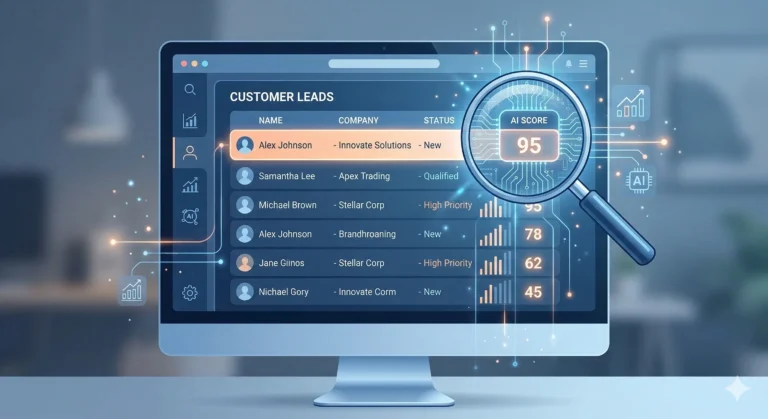
- Lead Scoring: Ranks potential clients based on their likelihood to close, helping sales teams prioritize their time.
- Sentiment Analysis: Monitors social media and reviews to predict shifts in brand perception before they affect sales.
- Price Optimization: Suggests the ideal price points based on competitor data and current market demand.
Making AI Accessible for Small Teams
A common misconception is that predictive analytics requires a team of data scientists. In reality, many modern CRM and e-commerce platforms have these AI features built directly into their interfaces.
Software like Shopify, HubSpot, and Salesforce now offer simplified dashboards that translate complex data into actionable “to-do” lists. You don’t need to understand the math; you just need to be willing to follow the insights the machine provides.
The transition is often as simple as connecting your existing sales data and letting the AI run in the background. Within a few weeks, the system begins to learn your business’s unique rhythm and starts offering suggestions that improve with every transaction.
Design Note: When viewing your analytics dashboard, look for ‘Trend Indicators’—usually small green or red arrows. These are the simplest form of predictive output, signaling the direction your sales velocity is moving before it hits your bottom line.
Notes for Successful Implementation
- Data Quality Matters: AI is only as good as the data it consumes. Ensure your customer records are clean and your sales logging is consistent.
- Start Small: Focus on one area first, such as predicting which email subscribers are most likely to buy, before expanding to full inventory forecasting.
- Stay Human: Use the data to inform your decisions, but don’t let the machine replace the personal touch that makes your small business unique.
The Path Forward
The goal of predictive analytics isn’t to take the human element out of sales; it’s to empower humans with better information. By removing the fog of uncertainty, you can lead your business with confidence and spend more time building the relationships that truly matter.
As these tools become more intuitive and affordable, the gap between small businesses and big corporations continues to shrink. The future of sales belongs to those who are willing to look at the data today to see where they will be tomorrow.
Would you like me to help you identify which specific AI-powered CRM would be the best fit for your current sales volume and industry?