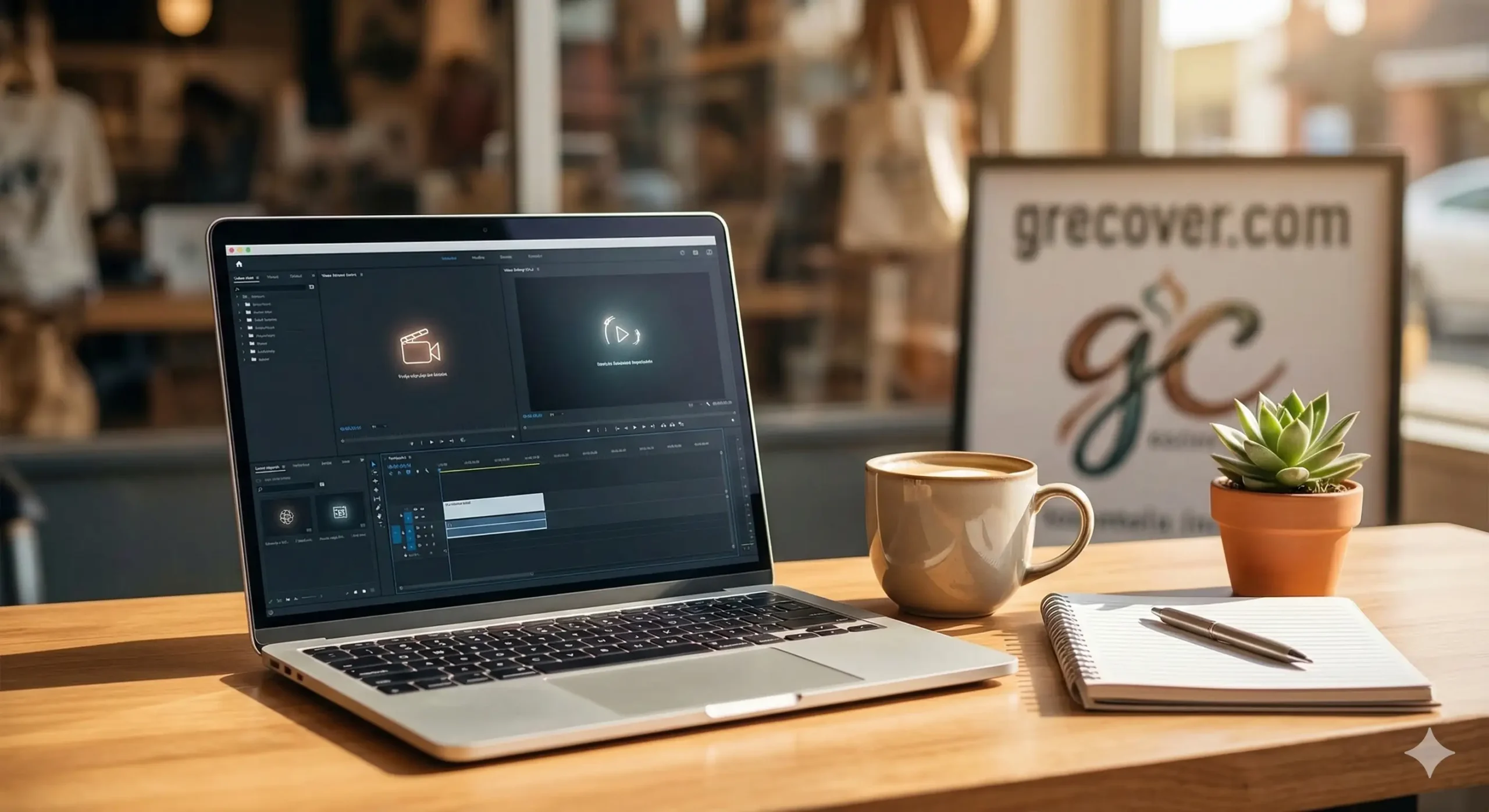
Running a small business is like juggling chain saws on a tightrope. You’re trying to manage inventory, keep customers happy, and—oh yes—market your products or services. Marketing often gets pushed down the priority list simply because it takes so much time and effort.
But when you finally have a moment, you see how impactful video content can be for other businesses. It captures attention faster than text, builds trust in ways images can’t, and feels more personal.
For a small business, video production has historically felt like building a rocket ship: expensive, technically complex, and requiring an entire specialized team. But recent breakthroughs in artificial intelligence (AI) have completely changed this dynamic.
Today, powerful AI video tools act as a small marketing department in your browser. They are accessible, affordable, and surprisingly capable. Here’s how they can revolutionize your content strategy without breaking your budget.
The Small Business Video Challenge
You know you need video. You’ve read the stats. But knowing you need it doesn’t make it easier to produce. The traditional process of filming, lighting, and especially editing is a huge bottleneck for small teams.
Imagine your ideal marketing video: a smooth showcase of your top service. How do you start? Maybe you try filming on your phone, but the audio is off, and you get stuck trying to sync music in free software. Before you know it, five hours have passed, and you’re no closer to a publishable video.
This reality drives many small businesses to post infrequently or settle for less engaging content, leaving a powerful communication tool on the table. Fortunately, that’s no longer the only option.
Enter AI Video Tools: What They Can Do for You
AI tools aren’t magic, but for a busy business owner, they can feel like it. They bridge the gap between having an idea and having a polished, effective video ready to upload.
These tools generally operate in three transformative ways, making complex tasks as simple as clicking a button.
1. The Script-to-Video Revolution
This is perhaps the biggest breakthrough. Instead of starting with a camera, you start with your message. You provide a script, a blog post, or just a few bullet points, and the AI converts it into a structured video.
The system intelligently analyzes your text, pairs it with relevant high-quality stock footage (from its massive library), and adds smooth transitions and royalty-free music. You are left with a surprisingly polished draft to review in minutes.
It’s a massive jumpstart. Rather than filming from scratch, you spend 15 minutes reviewing and tweaking the automated result. This turns content creation from a multi-day ordeal into something you can manage over lunch.
2. The AI Avatar Speaker
Many of us dread being in front of a camera. The pressure of getting the delivery just right, fixing hair, or even finding the right lighting is enough to stop most before they begin.
AI avatar tools solve this. You select a digital human avatar that looks professional, choose their voice, and paste in your script. The avatar then “speaks” your words naturally, with realistic lip-syncing and movements.
This is perfect for informational videos, explaining services, or providing quick tips. Your business still gets a human connection on screen, but you (or your staff) don’t need to do the filming.
3. AI-Assisted Smart Editing
If you *do* want to film yourself, AI helps here too. New tools use AI to transcribe your footage instantly, allowing you to edit the video just like you’d edit a text document: just cut the text, and the corresponding video clip is cut too.
They can automatically remove long pauses, “ums” and “uhs,” and even add captions and subtitles that match your branding. This cuts the most tedious 80% of video editing time down to 10%.
Putting AI Video to Work: Real Marketing Scenarios
These features sound great, but what does this look like in practice for your small business? Here are a few ways you can integrate these tools right away.
A bakery, for example, could use a script-to-video tool to quickly create 15-second recipe teaser videos from their existing blog content, perfect for Instagram Reels or TikTok.
A local insurance agency could use an AI avatar video to explain complex policy changes, posting it on their website’s FAQ page to build trust without an expensive production day.
And a landscaping service could use the smart-editing tools to quickly add captions and branding to a simple “before and after” video filmed on a phone, making it instantly more professional before posting it to Facebook.
Micro-Case Example: Local Bookshop Boost
Imagine a local independent bookstore wanting to promote their “Staff Picks” monthly feature. Instead of filming, they use a script-to-video AI. They type in the book titles and a 2-sentence blurb for each. The AI automatically grabs beautiful, relevant stock images of people reading, stylized book cover art, and pairs it with subtle music. In just 20 minutes, they have a professional video they can post to their Instagram Reels and website, generating 30% more online sales than a static photo post.
Balancing the Technology with Human Touch
As excited as we get, the goal isn’t to replace your human presence. The best strategy is a blended approach. Use AI for consistency and scale, and sprinkle in completely authentic, human-filmed moments where it matters most.
- Authenticity vs. Scalability: An AI video is excellent for explanation and tips, but the genuine human warmth of a 30-second video of your actual team greeting customers is irreplaceable. AI videos generate *consistency*; *you* generate *trust*.
- The Review Is Critical: Never just press ‘publish.’ The AI can make weird clip choices or have a slightly robotic tone in some sentences. Take the time to refine and approve everything. Your human intuition is the quality control.
- Start Simple: Don’t try to learn every advanced feature at once. Start with one simple project, like converting a popular blog post, and build from there.
Getting Started and What to Look For
You don’t need a computer science degree to get started. Most popular tools like Canva (with its ‘Magic Media’ and editor features), CapCut, and platform-specific leaders like InVideo or HeyGen are all accessed through a web browser or simple app.
A typical subscription runs from $15 to $30 a month. While that’s not free, it is vastly more affordable than hiring a videographer or agency, especially given the sheer volume of content it allows you to create.
The time savings alone often pays for the tool within the first month. By taking the heavy lifting out of video production, these tools empower small businesses to compete for attention and build their brand in ways that were once only possible for corporations with large budgets.
Conclusion
For a small business, video marketing has moved from a “someday” luxury to a “today” requirement. You no longer need to be a video professional or have a massive budget. AI tools have democratized production, making professional-quality video accessible for everyone.
Start with one tool, one idea, and a simple message. You might be surprised at how quickly you can make a meaningful impact and reclaim hours of your day. Take that first small step; your future marketing strategy will thank you.