Running a small business website often means wearing many hats simultaneously. From managing orders to maintaining content, your time is extremely valuable.
One of the biggest challenges, however, is providing consistent support. Customers expect quick answers, no matter the time of day, making traditional helpdesks difficult for small teams.
Fortunately, AI helpdesk software is changing this dynamic dramatically. It offers sophisticated support capabilities previously only affordable for larger corporations.
This article explores the best AI-powered tools tailored specifically for small business websites, helping you streamline your customer service without stretching your resources.
The Critical Role of AI for Small Business Support
Small business owners often feel like a single conductor trying to manage an entire orchestra of customer needs. Every question is important, but there aren’t enough hands.
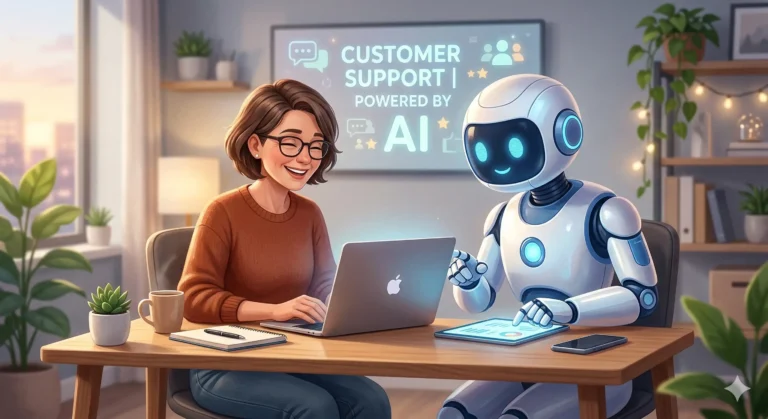
AI helpdesks act like that assistant conductor, taking over routine parts. They handle common inquiries, allowing you to focus on more complex tasks that require a human touch.
This automated support isn’t just about efficiency; it’s about accessibility. With AI, your website can offer 24/7 support without you having to be awake all night.
Defining AI Helpdesk Software for Websites
When we talk about an AI helpdesk for small businesses, we are referring to software that integrates directly with your website and uses artificial intelligence to assist customers.
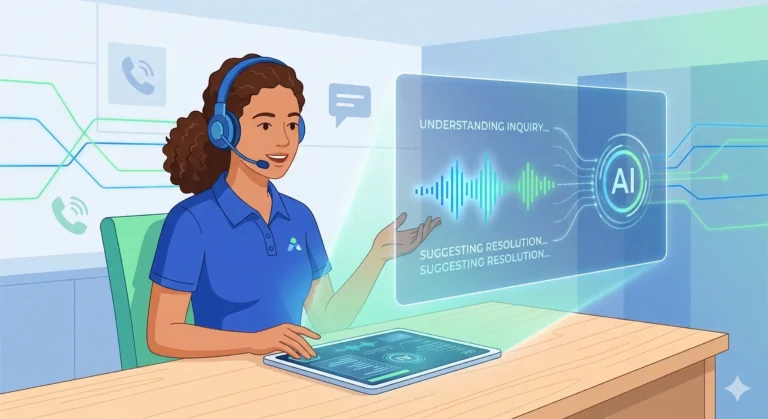
This often includes AI chatbots for initial contact and machine learning algorithms that suggest answers or route issues effectively to human agents.
Think of it as the first point of contact that can intelligently decide whether it can solve the problem instantly or needs to find the right person for help.
Top AI Helpdesk Solutions for Small Businesses
Choosing the right AI helpdesk involves balancing powerful features with a budget that fits your scale. We have selected options that offer the best value for small operations.
Each of these solutions brings unique strengths to the table, particularly regarding AI implementation for website support. Let’s dive in.
1. Zendesk: A Powerful (and Accessible) Ecosystem
Zendesk is a name synonymous with customer support, and for good reason. It offers an incredibly robust ecosystem that scales from small startups to global enterprises.
Their AI functionality is particularly strong. For small businesses, features like Answer Bot use machine learning to scan your knowledge base and suggest immediate answers to customer questions via chat.
Think of it as an extremely knowledgeable assistant who has read all your support documentation and can instantly find the relevant page for the customer.
Zendesk also provides valuable automated ticketing and robust analytics. This helps you understand what issues are most common and refine your AI’s performance.
While often seen as complex, Zendesk’s lower tiers are very manageable and provide access to core AI tools that small teams can leverage significantly.
2. Freshdesk by Freshworks: User-Friendly and Efficient AI
Freshdesk is another heavy hitter, known for its focus on usability and simplicity. This makes it a great entry point for small businesses new to AI helpdesks.
Their AI assistant, Freddy AI, is designed to enhance efficiency. Freddy can help with routine tasks, automate ticket classification, and even suggest appropriate canned responses.
It acts like a friendly colleague who takes care of the repetitive paperwork so you can have more meaningful interactions with your customers.
Freshdesk’s ticketing system is excellent for organizing customer interactions, and its collaborative features ensure no request slips through the cracks.
Small teams often appreciate how quickly they can deploy Freshdesk and start using its AI features with minimal training, leading to faster implementation and results.
3. Gorgias: The Ideal AI Helpdesk for E-commerce
If your small business website revolves around e-commerce, Gorgias is highly recommended. It’s designed to integrate seamlessly with platforms like Shopify and BigCommerce.
Its AI capabilities are specifically tailored to common e-commerce questions. It can automate common inquiries like order status updates, refund requests, and product availability.
Imagine having a specialized store clerk who knows the status of every single order and can answer those recurring questions without needing any help.
Gorgias concentrates on speeding up response times for your customers. For small e-commerce sites, this increased efficiency directly relates to better customer satisfaction and more sales.
It consolidates all support channels (email, chat, social media) into one dashboard, making it easier to manage everything efficiently.
4. Intercom: Balancing AI with Human Connection
Intercom is famous for its powerful chat solutions, but its underlying platform is robust. Its approach to AI focuses heavily on proactive engagement and smooth transitions.
Their AI, Fin, is extremely capable and uses advanced natural language processing. It can answer a vast majority of routine support questions immediately on your website.
Intercom feels like a sophisticated digital greeter that can handle most inquiries but knows precisely when to connect the customer with a human specialist.
Intercom emphasizes conversation over tickets, which many small businesses prefer for a personal touch. Its AI works smoothly in the background, allowing you to focus on relationships.
This balance of powerful AI with a conversational focus can be highly effective for building loyalty, even for smaller brands with limited support staff.
Selecting the Right Tool for Your Business
Deciding which of these solutions is best requires an understanding of your specific needs and constraints. A one-size-fits-all approach rarely works for software.
Start by evaluating your primary goals. Are you drowning in common questions (Zendesk or Intercom), or is organizing your inbox your biggest challenge (Freshdesk)?
Consider your integration needs. E-commerce sites will likely find Gorgias irreplaceable, while businesses with varied sales channels might prefer Freshdesk or Zendesk.
Budget is, of course, a critical factor. Many of these platforms offer tiered pricing. Look closely at which features (especially the AI capabilities) are available at each level.
Don’t be afraid to utilize free trials or demos. Getting hands-on experience is often the best way to determine if a software aligns with your team’s workflow and comfort level.
Considerations for Small Business Implementation
A successful implementation involves more than just selecting software. Small businesses need to be strategic to maximize their investment in an AI helpdesk.
You must ensure your existing documentation (like FAQs and help articles) is well-organized and accurate. AI systems rely on this data to answer questions effectively.
Take the time to train your AI appropriately, and plan for a smooth transition where human agents can handle complex escalations efficiently.
Start small. Don’t try to automate everything at once. Focus on the top 10 most common inquiries first and expand your AI’s capabilities as you get more comfortable.
Regularly reviewing analytics and gathering feedback from your team and customers is also vital for continuous refinement and getting the most out of your chosen platform.
Conclusion
Investing in an AI helpdesk can transform how you manage customer support for your small business website, delivering faster, more efficient service with limited resources.
Zendesk, Freshdesk, Gorgias, and Intercom all provide excellent solutions with powerful AI features suitable for varying needs. The key is finding the right fit for your specific strategy.
Don’t let support challenges hold your small business back. Embrace the power of AI to provide exceptional customer experiences and drive growth, allowing you to reclaim valuable time for other priorities.
By leveraging the right tool and approaching implementation thoughtfully, your small business can compete effectively, offering the kind of support that keeps customers coming back, day after day.